Copper vs. Aluminum Busbars: Why Long-Term Joint Performance Matters
November 7, 2026 12:05 pm
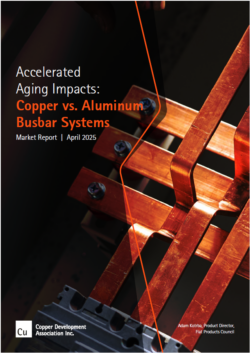
Choosing a busbar material involves more than comparing conductivity, weight, and purchase price. The Copper Development Association’s report, “Accelerated Aging Impacts: Copper vs. Aluminum Busbar Systems,” highlights another critical consideration: how connections perform through repeated heating and cooling.
Storm Power Components supplied sample busbars for the study, with testing designed and executed by Kinectrics in Toronto. The results offer practical insights for engineers evaluating material selection, joint reliability, and lifecycle performance.
What the Testing Revealed
Researchers evaluated two copper and two aluminum busbar designs using repeated 3,500-amp heating cycles followed by fan-assisted cooling. This current was nearly twice the samples’ targeted design current, deliberately accelerating aging.
- More stable copper connections: During the first 304 cycles, copper fastener torque losses averaged 9–15%, compared with 38–56% for aluminum. Copper joint resistance increased 11–14%, while the aluminum designs showed increases of 35% and 236%.
- Recurring aluminum heating: Testing paused after aluminum busbar temperatures exceeded 250°C. All fasteners were retorqued, but rising aluminum temperatures and joint resistance prompted another stop after 78 additional cycles.
- Geometry matters: Among the aluminum designs, which had equal cross-sectional areas, the thinner, wider profile ran cooler. Material choice alone did not determine thermal performance.
The Engineering Lesson: Design the Entire Connection
The report attributes the aluminum joints’ deterioration to greater thermal expansion and repeated stress on the fastening hardware. As connections loosened, resistance and heat increased, creating a reinforcing cycle of degradation.
These findings apply to the tested configurations and accelerated conditions, not every aluminum busbar installation or a specific number of years in service. They reinforce the importance of evaluating conductor geometry, joint hardware, thermal cycling, and maintenance requirements together.
Putting the Findings to Work with Storm Power
Storm Power fabricates both copper and aluminum busbars and provides engineering support to match the material to the application, rather than prescribing one material for every design (Storm Power’s material-selection guidance). For engineers, this study adds a useful question to that process: how will the complete connection perform after repeated thermal cycling?
The takeaway is to look beyond initial material savings and consider joint stability, heat generation, maintenance, and total ownership cost. Talk with Storm Power about evaluating copper and aluminum options against your application’s current profile, space constraints, and operating environment.
Read the full report here: Accelerated Aging Impacts: Copper vs. Aluminum Busbar Systems
Bus Bars | by Storm Power Team
Comments are closed here.